October 21, 2026

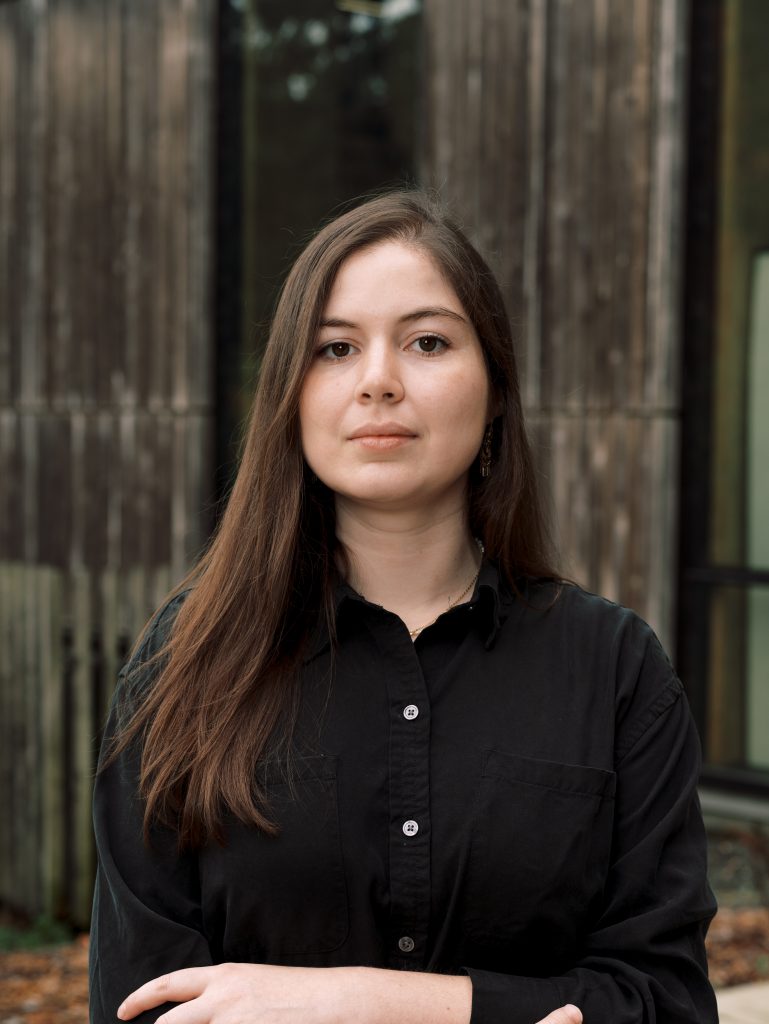
Nicole Sarmiento, intern at InnoRenew CoE, UP IAM; Main areas of research: Architecture, Wood Science and The Built Environment
I grew up in Cuenca, Ecuador. I currently live in Corvallis, Oregon, in the United States, where I am pursuing my doctoral studies at Oregon State University.
I first studied architecture. I was drawn to the way buildings came together and how these impacted cities and people. Later, I continued with a Master of Architecture and work in practice and teaching, which deepened my interest in how design decisions affect people’s daily lives. My current doctoral work in wood science grew from a desire to stay connected to architecture while pursuing my interest in materials, construction and sustainability. I was motivated by the possibility of working across disciplines.
I study how we can design and construct with wood in ways that make buildings more sustainable, more adaptable and more responsive to present needs such as housing, urban density and environmental responsibility. In simple terms, I try to understand how material, design and policy can work together to improve the places where people live.
My typical day usually includes reading, writing, meetings and organizing ideas. Some days are spent reviewing literature, case studies and refining research questions, while others involve developing presentations and documents. I enjoy that my days are varied: part analytical, part creative and part collaborative.
What excites me most is that my work allows me to connect design, material, sustainability and social impact. I am especially motivated by research that can eventually support better buildings and cities. I also enjoy that this field still has many open questions, which makes it feel alive and full of possibility.
As an early-career researcher, one of the biggest challenges for me is refining research questions. I am a curious person and I am interested in many connected issues at once. But research requires channeling that curiosity into questions that are specific, tangible and focused enough to guide a clear research design. Learning how to move from curiosity to precise inquiry is challenging.
I am deeply fascinated by the empirical knowledge embodied in vernacular architecture. Over many years, communities developed building traditions through observation, trial and error, adaptation to climate and collective knowledge. I find it remarkable that these accumulated practices produced spaces and systems that we can still study and learn from today.
Beyond architecture, I enjoy observing painting, especially the avant-garde movements and the different “isms.” I am fascinated by how these artistic currents developed in parallel and produced all these different visual languages and ways of seeing the world. Joan Miró is one example I find especially compelling.
Lately, I have been reading mostly academic work. Outside of that, I have mostly been listening to music that reminds me of Ecuador and keeps me connected to home.
I think this answer may keep changing as I continue exploring the Slovene coast, but for now I really enjoy going up the clock tower in Izola and looking out at the sea. Because of its location, it gets very windy there, which makes it especially pleasant on warm days.
Feeling that ideas are connecting.
My guiding principles have changed over time, and I think they will continue to evolve. One guiding principle I follow is to try to be involved in things that are meaningful and where I can contribute. Over time, I have realized that this matters more to me than simply reaching an end goal. I value being part of work that is connected to something larger
I find wood fascinating because it has been here long before us and has supported not only human life, but also entire ecosystems. It has provided shelter, tools and forms of artistic expression, while forests have also remained habitats, cultural landscapes and places of recreation. What I find especially meaningful is that wood is not something we create from nothing, but something we learn to work with, adapt to and care for. To me, the charm of wood lies in that relationship: it is both a material and a living part of a larger natural system.