September 4, 2026

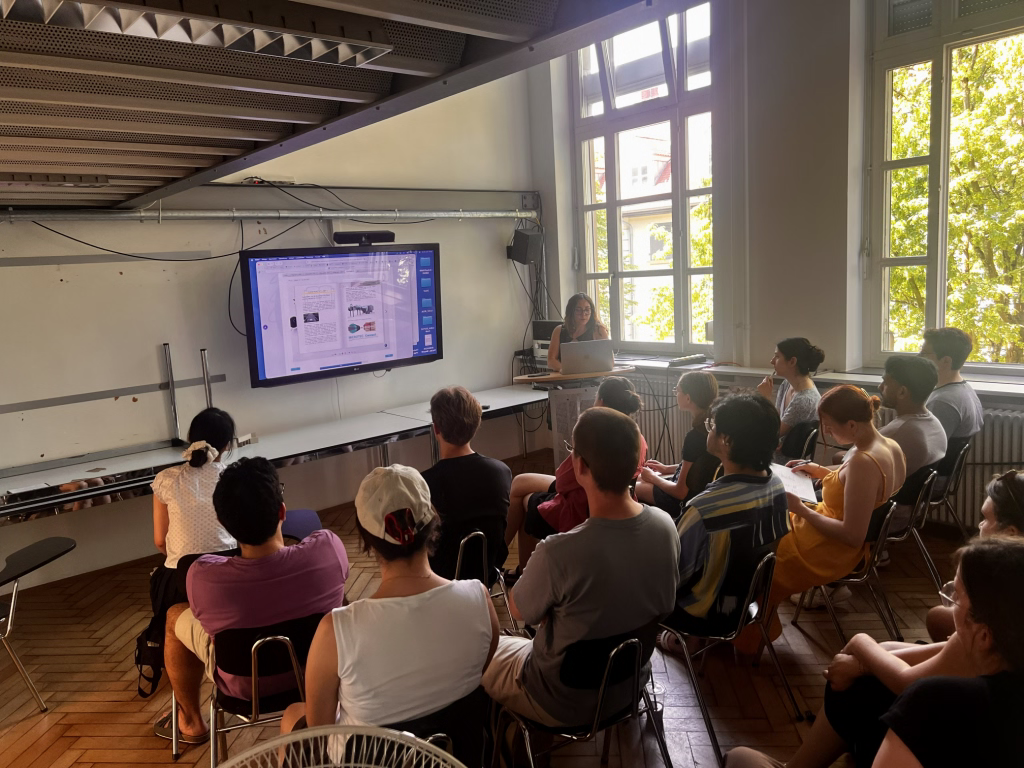
Over the course of two weeks, students from Oregon State University, Saarland University and the University of Primorska explored the wood manufacturing industry in Slovenia. This course brought together 13 students from the United States, Germany, and Slovenia. Participants explored each aspect of the value chain, with students visiting forests, manufacturing plants, construction sites, research institutes, and completed buildings to gain a broader understanding of wood products. As Europe aims to be carbon-neutral by 2050, the construction and manufacturing industry must continue to find innovative ways to problem-solve. Manufacturing wood products greatly reduces embodied energy, sequesters carbon, and enhances built environments, making wood a crucial material for carbon neutrality and an important concept to teach future leaders.
Students learned about the circular economy model compared to the linear economy model, which is common outside Europe, especially in the United States. Gaining knowledge about how materials and products can be kept in circulation for as long as possible with minimal waste. The information shared benefits all students, both personally and at the community level, as that knowledge is brought back and shared.
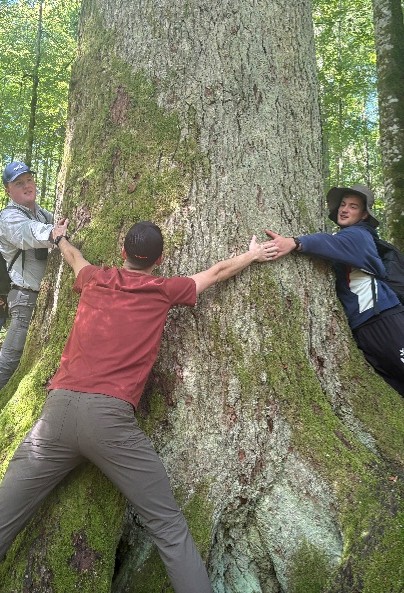
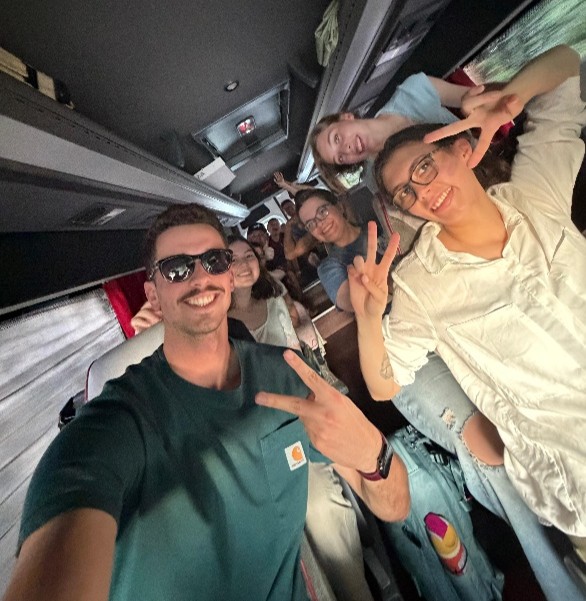
Many local companies were generous enough to open their doors to the group of university students and to educate them about their processes and their companies. Among them was iQwood, where students learned how dowel-laminated timber was manufactured and its high strength in the absence of adhesives, chemicals, or metals. Another company visited was MSora Windows, which introduced the group to a company that effectively uses wood in ways that may not often be thought of. Many students were inspired by the company’s dedication to their agricultural community and to worker safety and health.
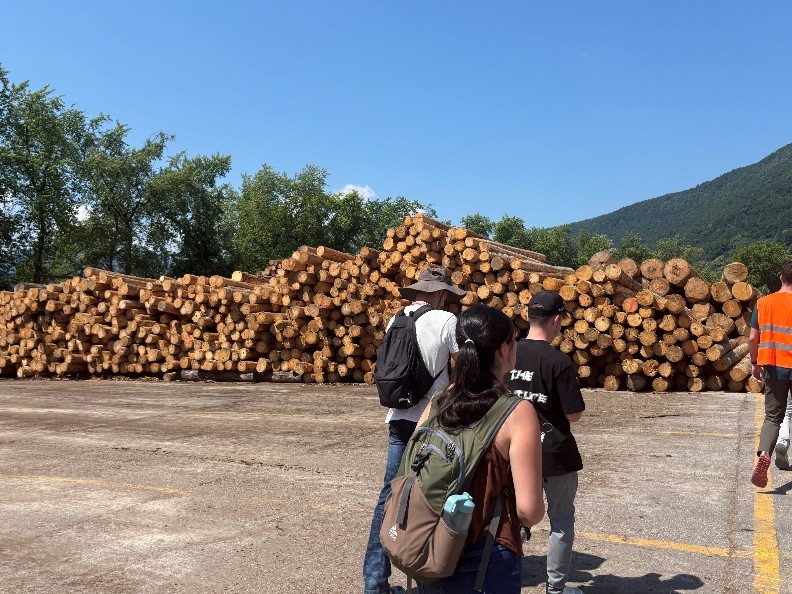
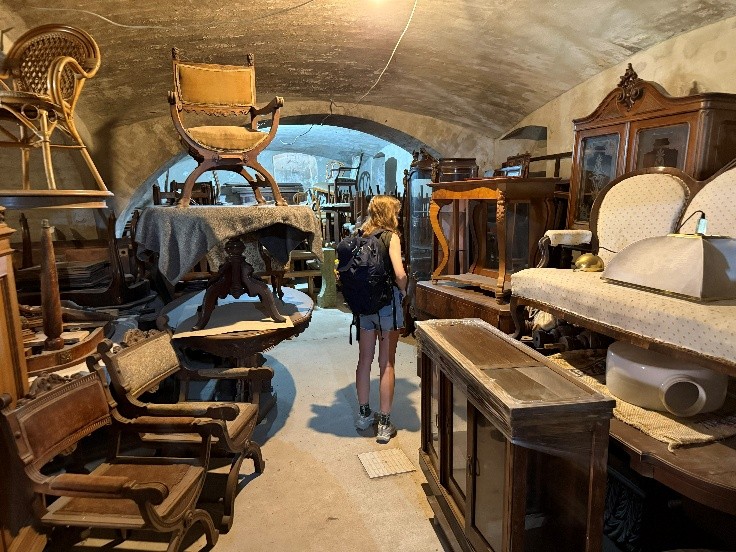
Quintin Beers, a Civil Engineering graduate student from Oregon State University, reflected that, “This experience highlighted the benefits of vertical integration and automation in wood production. I particularly enjoyed the small production facilities, where new techniques such as dowel-laminated timber were being tested. Overall, I found the built environment surprisingly different from the U.S. and enjoyed seeing a new perspective on sustainable growth and innovation.”
Another student, Zoja Mohorči, who is earning her MSc in Sustainable Built Environments from the University of Primorska, stated, “I found it extremely valuable to gain insight into a wide range of companies across Slovenia, with the opportunity to observe not only their production processes but also their values, priorities, and approaches to development. Sharing this experience with fellow students enriched the program, as it allowed me to learn also from their perspective while also developing friendships and learning about the differences between our countries.”
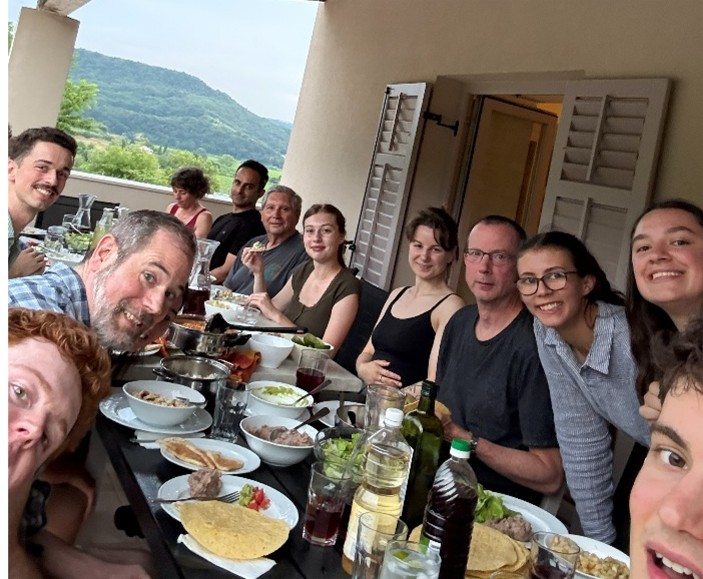
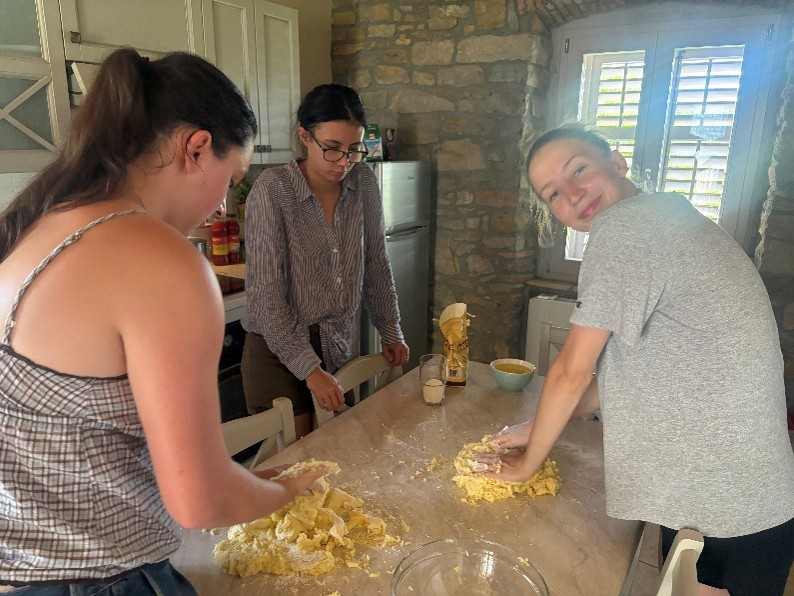
In addition to learning about sustainable manufacturing and economic practices, there were opportunities to engage with the public and to learn about Slovenian culture and history firsthand. Many students enjoyed spending time in Bovec, where they had the opportunity to be in nature by canyoneering, ziplining, and hiking. Another highlight for many students was the teambuilding. Whether that was asking the general public about their experiences with wooden built environments, or by making dinner together. The knowledge and experience gained throughout the two weeks these dedicated students spent will not only benefit them but also contribute to the climate-neutral initiative itself.
Author: Savannah White, student at OSU