October 14, 2026

As part of the WENUS pilot phase, the Karlsruhe Institute of Technology (KIT) organised a Stegreif design exercise entitled “Weightless – Principles of Tensegrity in Furniture Design”. The activity took place at the KIT Faculty of Architecture and connected the principles of tensegrity with sustainable and circular approaches to furniture design.
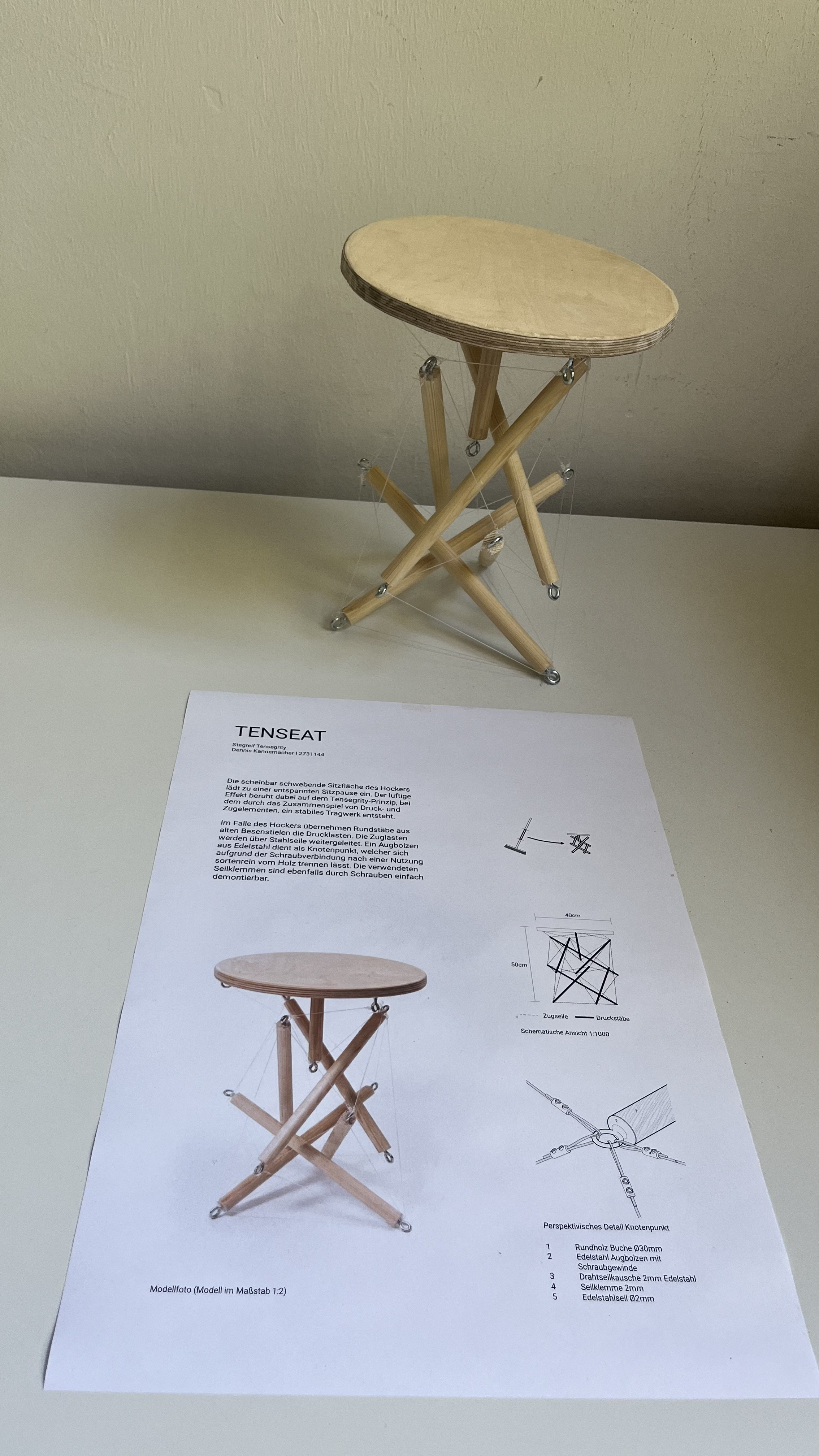
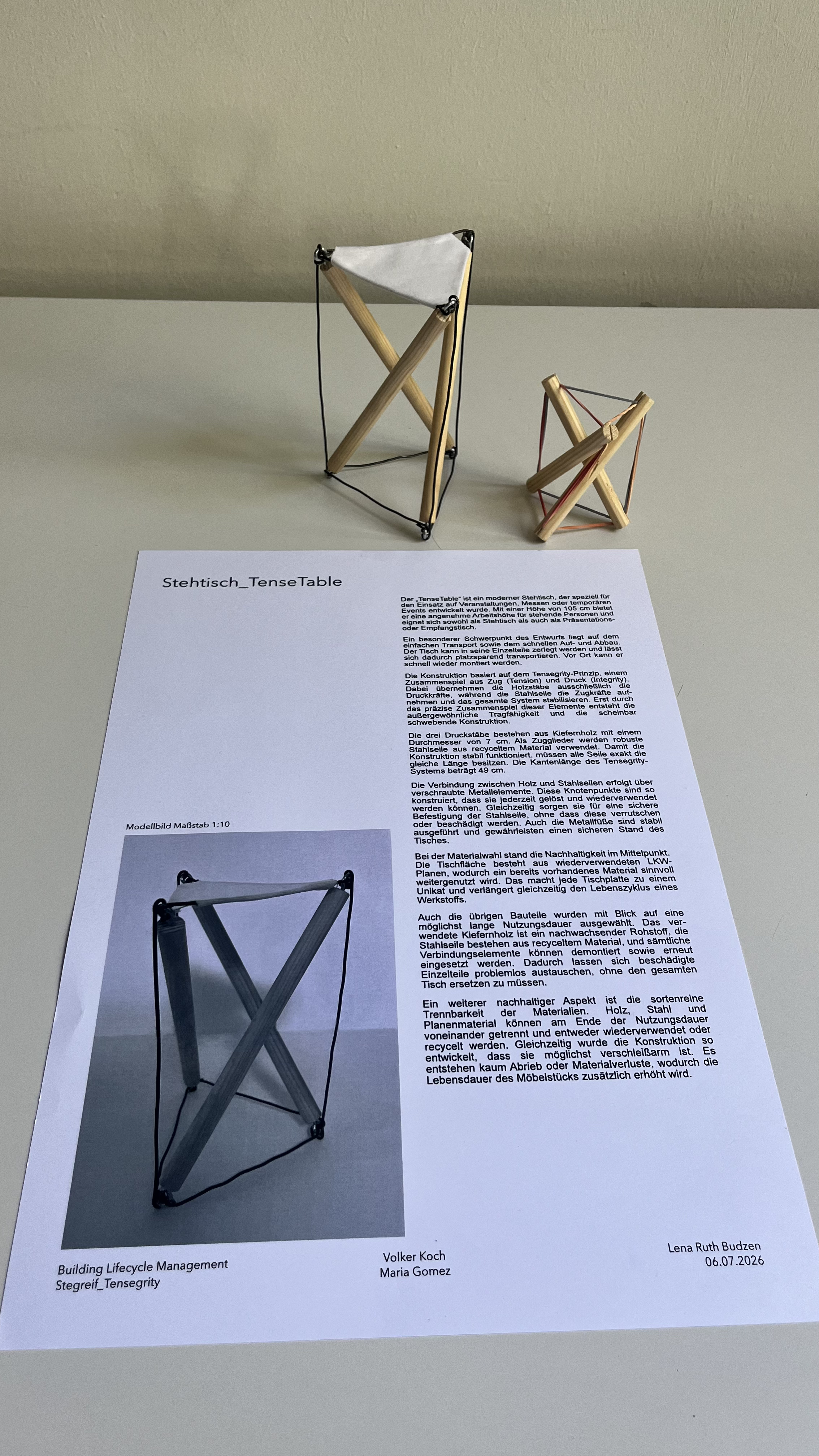
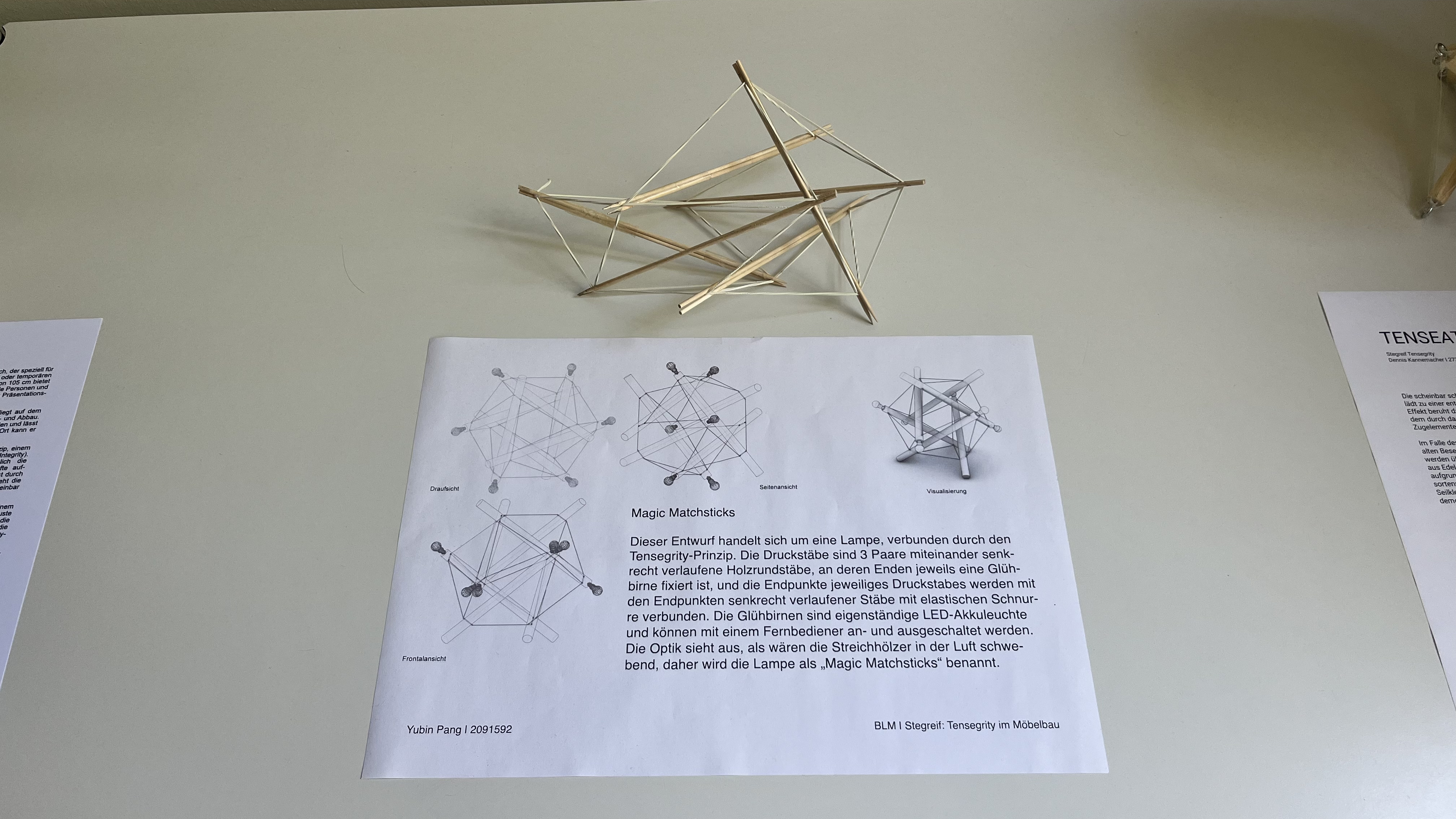
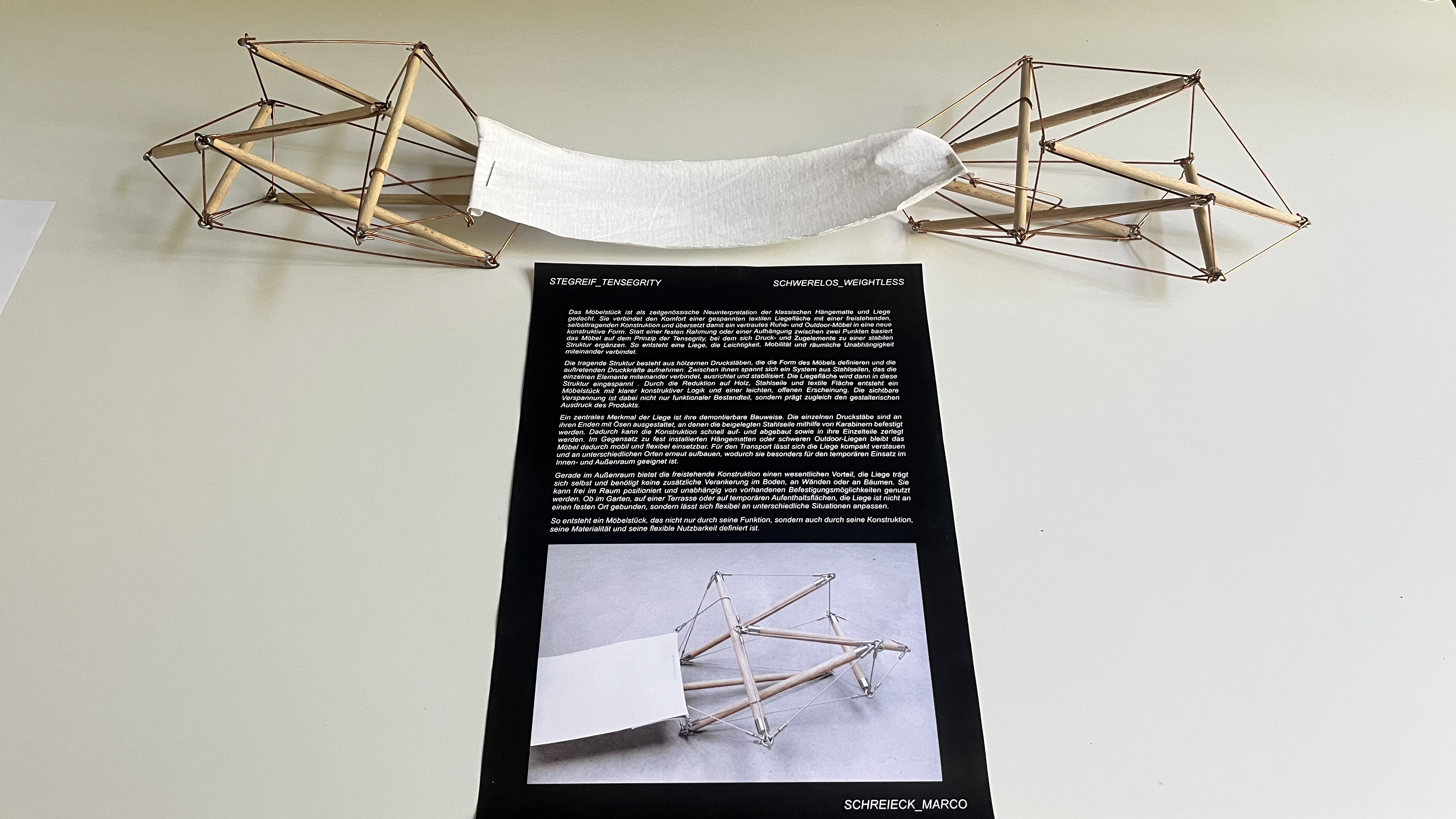
The exercise challenged students to develop a functional piece of furniture, such as a stool, table, shelf or lamp, using the structural principles of tensegrity. In these systems, compression elements do not touch each other but are held in equilibrium by a network of tension elements, allowing lightweight structures to be created with an efficient use of materials.
The assignment also explored several principles related to the circular economy, such as Design for Disassembly, material separation, reduced material use, flexibility and mobility. Wood was used for the compression elements, while students were free to select additional materials according to their individual design concepts.
The Stegreif was launched on 23 June 2026 and concluded with the submission of the students’ physical models and design documentation on 6 July 2026. Through the design and construction of their prototypes, participants translated theoretical concepts into tangible solutions and explored how structural efficiency, material choices and circular design principles could be combined in practice.
The activity was integrated into the WENUS pilot implementation. Participants registered on the WENUS e-learning platform, completed one or more of the learning modules developed within the project and subsequently contributed to the pilot evaluation by completing the satisfaction questionnaire.
Combining the online learning materials with the practical design exercise made it possible to test the WENUS content in a higher education setting at KIT and to collect additional feedback for the evaluation and refinement of the project’s educational resources.
The photos below show five of the students’ works and the different ways they interpreted the tensegrity principle in furniture and lighting design.