September 24, 2026

A team of students from the University of Primorska, Faculty of Mathematics, Natural Sciences and Information Technologies (UP FAMNIT), has won first place in the Slovenian round of the Bio-based Innovation Student Challenge Europe (BISC-E), a Europe-wide student competition that promotes bio-based innovation and entrepreneurship. With this achievement, the team has qualified for the European final, where it will represent Slovenia in September 2026. This is also the first time the University of Primorska has participated in the competition.
The winning project, From Sawmill Residues and Marine Sediments to Sustainable Construction (SediMateria), explores the development of a sustainable building product by combining marine sediments from the Port of Koper with sawmill residues. The project investigates the development of a bio-clay board, a non-load-bearing building element made from biological and geological resources for insulation and interior finishing. By linking waste and residual streams, the project proposes an innovative product that reduces resource consumption, lowers environmental impact, and supports the transition to a bio-based, circular construction sector.
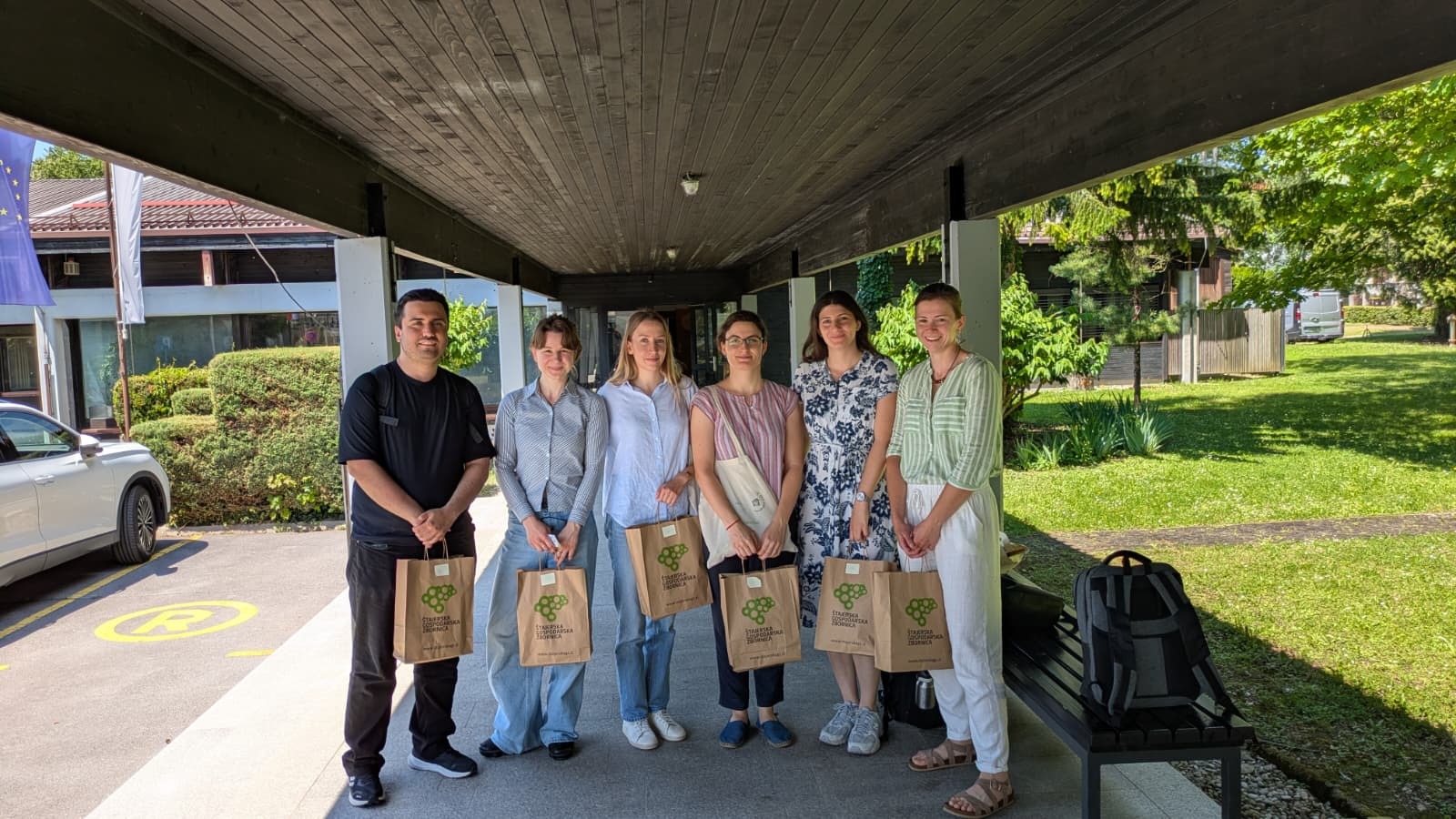
The project was developed under the supervision of Dr. Andreja Kutnar, department chair of InnoRenew CoE, UP IAM. The team consists of Katarina Legat and Zoja Mohorčič, students of the Master’s programme Sustainable Built Environments, and Špela Vrtovec, Una Vuletić, Erfan Asgari and Olga Srejić, PhD candidates in the doctoral programme Renewable Materials for Healthy Built Environments, who are also involved in research activities at InnoRenew CoE, UP IAM.
BISC-E (Bio-based Innovation Student Challenge Europe) is a Europe-wide student competition that promotes entrepreneurship and encourages students to develop innovative bio-based products and processes addressing technological, environmental and societal challenges. The European final brings together the winning teams from national competitions across participating European countries. The national coordinator of the competition is SRIP – Circular Economy, in collaboration with the Biotechnical Faculty of the University of Ljubljana.