September 24, 2026

The SubOrbital Express-5 rocket successfully launched on 31 May 2026 from the Esrange Space Center in northern Sweden as part of the SSC Space program. The mission provided access to microgravity for 12 scientific projects from nine countries, enabling research into physical, biological and medical processes under conditions not possible on Earth.
Within the mission, the STAR project, coordinated by UP IAM and led by Dr. Anna Sandak, a researcher at InnoRenew CoE, UP IAM, head of the Materials Research Group and associate professor at the University of Primorska, in collaboration with Dr. Anja Černoša and Ana Gubenšek, researchers at InnoRenew CoE, UP IAM, successfully completed its first step. Biological samples, including a fungal strain used in the ARCHI-SKIN project, were sent into space and safely returned to Earth. The experiments were conducted in the GEN-1P module, part of the GEN-1 capsule system coordinated by Genesis Space Flight Laboratories. The GEN-1P module uses sensor technology to monitor microbial metabolism and responses in real time, providing insight into organism behavior in microgravity.
The STAR project, funded by ERC POC Potencial and the Slovenian Research and Innovation Agency (ARIS), investigates the behavior and adaptive mechanisms of fungi in extreme space conditions such as microgravity and radiation, with the aim of developing more resilient and functional engineered living materials. In this context, the results are also relevant for the further development of bio-inspired materials such as ARCHI-SKIN.
More information about the SubOrbital Express-5 mission can be found in the article “Twelve experiments launched to space from Esrange Space Center in Sweden”, published on the SSC Space website.
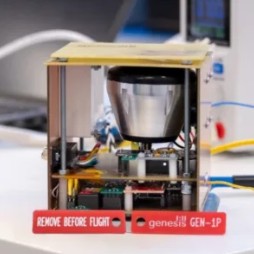
Image and cover image: SSC Space