March 25, 2026

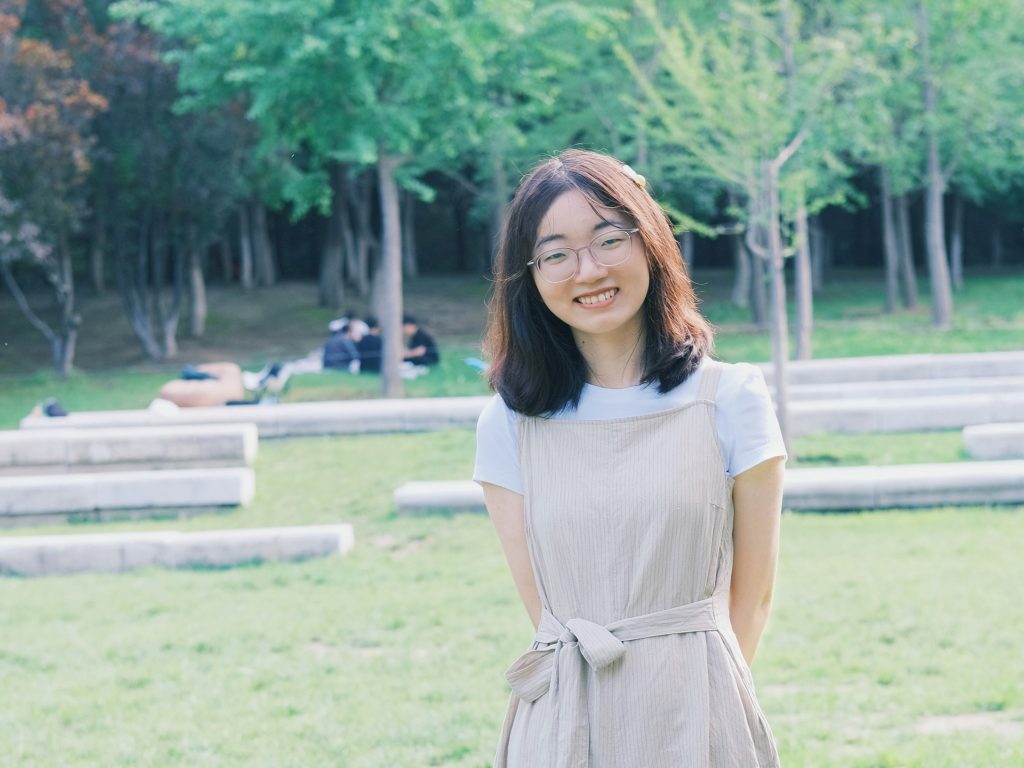
Aleksandra Rakinić Vidmar, architect at InnoRenew CoE, UP IAM
I spent my childhood in Radovljica, and for the past twenty years I have been living in the centre of Ljubljana.
I studied architecture. At the age of nine, I exhibited drawings of houses at my primary school, large-format drawings showing sections and façades. From that moment on, I never considered pursuing any other profession!
Architects manage administrative procedures related to obtaining building permits, design buildings, and place them into space in accordance with spatial planning regulations. We coordinate the plans of various disciplines (architecture, structural engineering, mechanical and electrical installations, fire safety, drainage, etc.) to prepare all the documentation required for construction. During construction, we carry out design supervision, which mainly involves interpreting project documentation.
When I work from home, I start at 7 a.m. with a cup of coffee. At 8 a.m., I take my first-grade son to school and pick him up at 4 p.m. Until then, I’m at my desk. I usually do another hour of work in the evening, between 7 and 8 p.m.
When I’m in Izola, I leave Ljubljana around 8 a.m. and stay until 6 p.m. Currently, I am preparing project documentation to obtain project conditions for the Galeb building in Koper.
Renovations are particularly challenging and exciting for me, as they require a broad range of knowledge, especially in understanding the building’s physical properties. The historical aspect and the consequences of various alterations for different uses are also fascinating.
I enjoy performing design supervision on construction sites, as it requires effective communication with all participants in the building process. Solving unforeseen situations on site gives me great satisfaction after the collective effort invested.
In the architectural office where I previously worked, I specialized in designing structural construction details in recent years, as I’m interested in building technology and materials. Overall, I find the profession of an architect exciting because it involves continuous learning – no two projects are ever the same, and no situation repeats itself.
The greatest challenge is scheduling and decision-making and determining what is more important at a given stage and what can wait. Each project requires a great deal of time, so it is essential to make the right decisions at the right moment and avoid complicating work by re-solving tasks that have already been completed.
I admire Nikola Tesla the most—without him, we cannot imagine the world as it is today.
Michelangelo holds a special place in my life. Twelve years ago, I read his biography, got on a train with the book in my lap, and travelled to Rome. I brought a sketchbook and sketched some of his masterpieces.
I was particularly impressed by the geometrically perfected Piazza del Campidoglio, with the equestrian statue in the centre – not placed on a pedestal, but as one of us, the users of the space. As a child, I used to look at pictures of the Sistine Chapel ceiling in books; however, when I saw it in person for the first time, I could hardly believe how spatial it felt – as if you could reach out and touch it.
Descriptions of Michelangelo’s works, viewed through the lens of his life and personality, led me to personally discover one of the greatest geniuses of all time.
In Japan, again traveling with a sketchbook, I was most fascinated by the largest wooden Buddhist temple in the world – Sanjusangen-do in Kyoto. In addition to its rich history, I was impressed by the sophistication of its wooden structure and its earthquake-resistant design concept. Sustainable construction today is still based on such ancient principles.
Most recently, I read Lord of the Flies, the debut novel by William Golding (1954), and Killing Commendatore by Haruki Murakami. I haven’t finished either of them yet. 😊
The book I read the fastest in my life: The Fountainhead by Ayn Rand.
The film that impressed me most recently: Coffee and Cigarettes by Jim Jarmusch. I like Jarmusch because he says so much with so little. He doesn’t even need a story, his film is the story.
I don’t have a favourite corner yet, except for my desk at InnoRenew CoE. 😊
As an architect and designer, seeing my work realized! I have the honour of contributing to something that will endure for some time, influence users, shape spaces, and build relationships among us. The opening of Galerija Cukrarna to the rhythms of Magnifico – at that moment, I was extremely proud to have been part of the project! And of course, the fact that my six-year-old son knows what extruded polystyrene is. 😊
Nulla dies sine linea – a Latin proverb meaning: Let no day pass without doing something in your profession; literally, “No day without a line.”
The magic of wood is in practically everything wooden. I hope that one day, when I grow up, I will build myself a wooden house. Or at least a chair. 😊