April 2, 2026

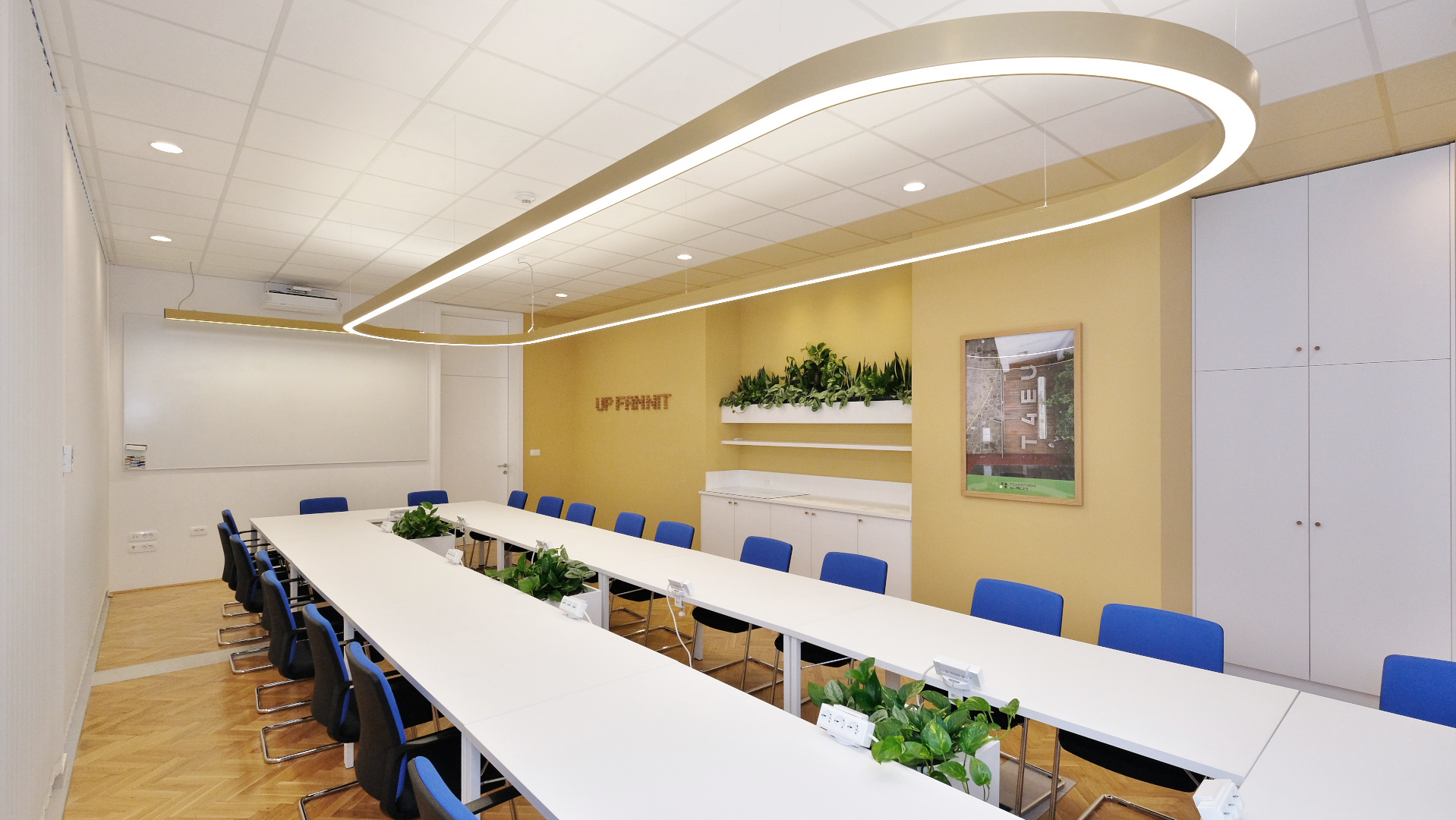
At the University of Primorska’s Faculty of Mathematics, Natural Sciences and Information Technologies (UP FAMNIT) in Koper, InnoRenew CoE architects and researchers, led by Zijada Adembegović Hujdurović, designed a modern renovation of the meeting room, adapted to the evolving needs of its users. The space was designed to be functional and flexible, intended for multifunctional use.
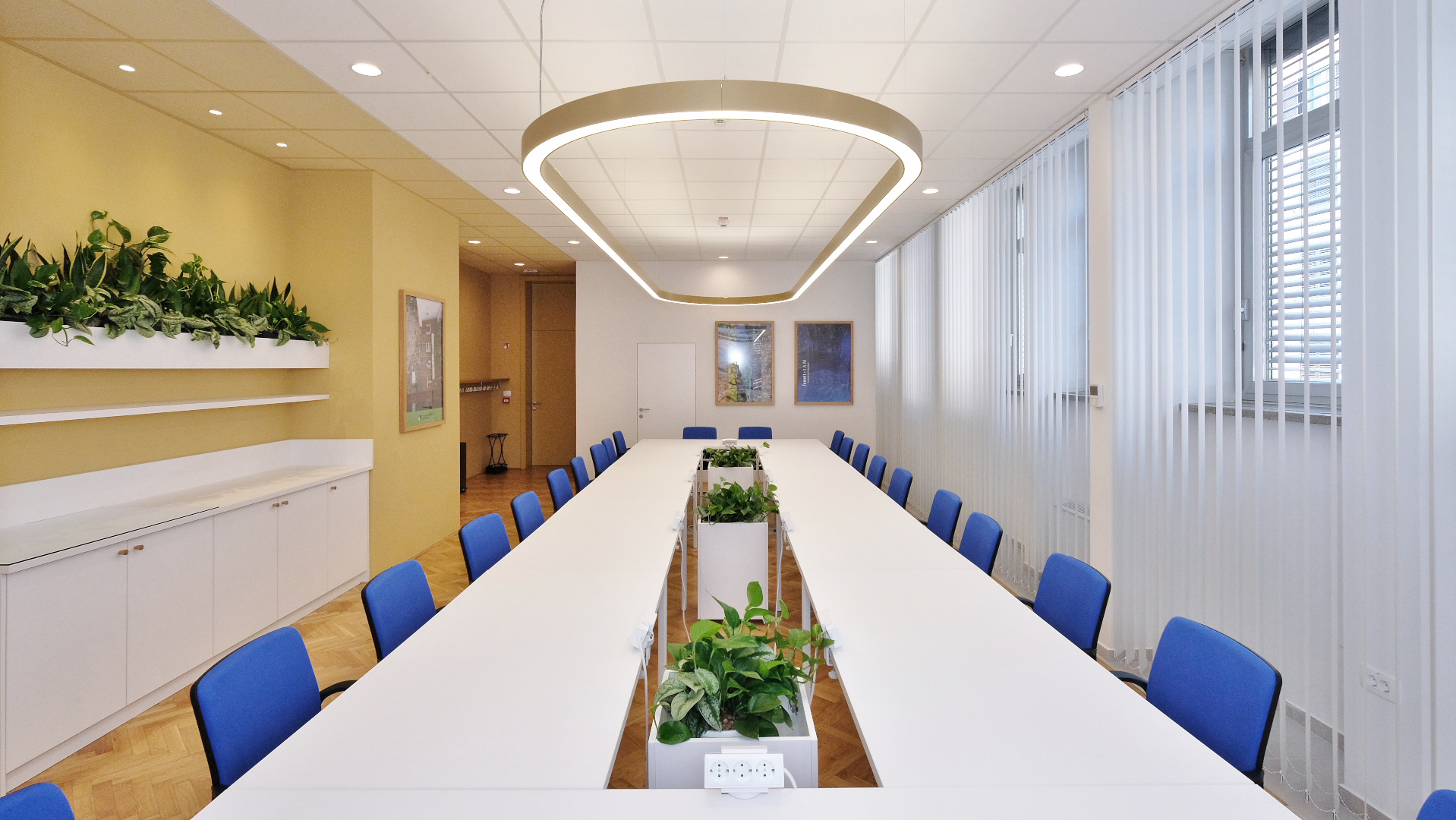
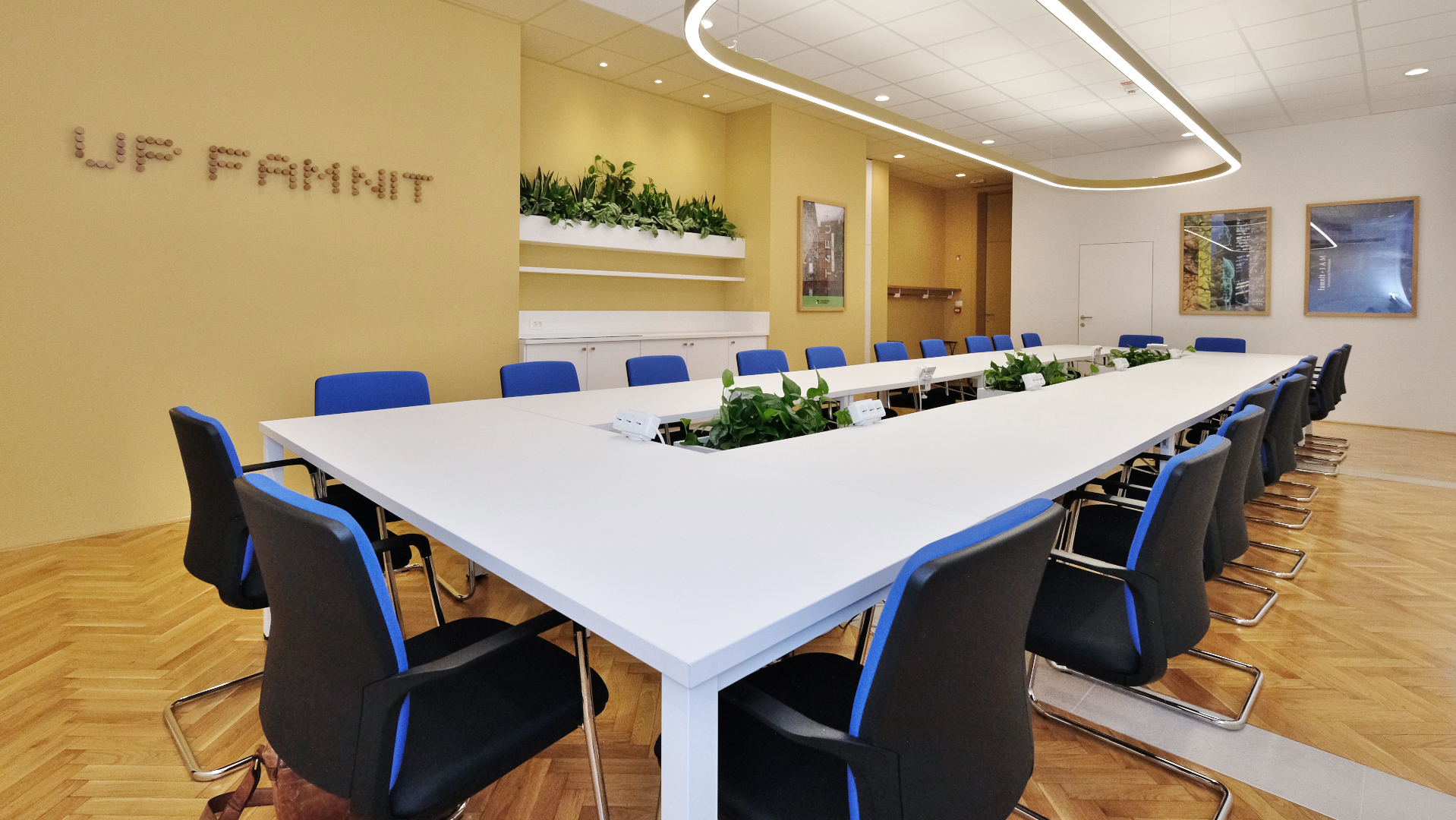
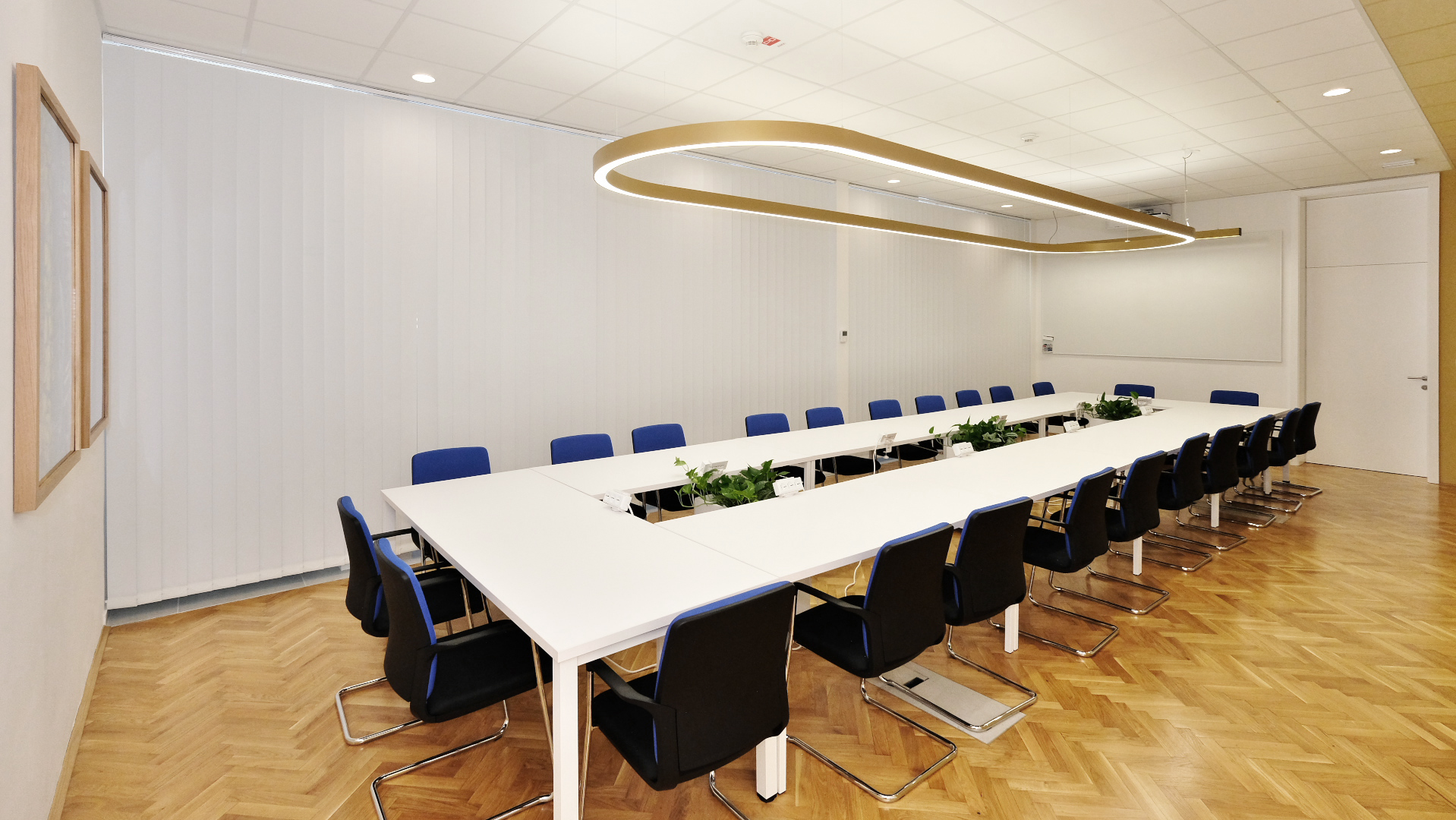
In the renovation and design process, we followed the design paradigm REED – Restorative Environmental and Ergonomic Design. The goal was to create a comfortable, relaxed, flexible, and inspiring environment that could effectively respond to the dynamic demands of modern educational processes. A key objective was also to generate as little waste as possible during the renovation and to reuse most of the existing materials in the space. We preserved the original oak parquet flooring and partition walls. All damaged sections of the parquet were repaired using ceramic elements, which adds a distinctive visual accent to the floor, and clearly indicate to visitors which components are original and which are newly added. Existing walls received new meaning through the use of color and furniture, which indicates that no new construction materials were introduced into the space.
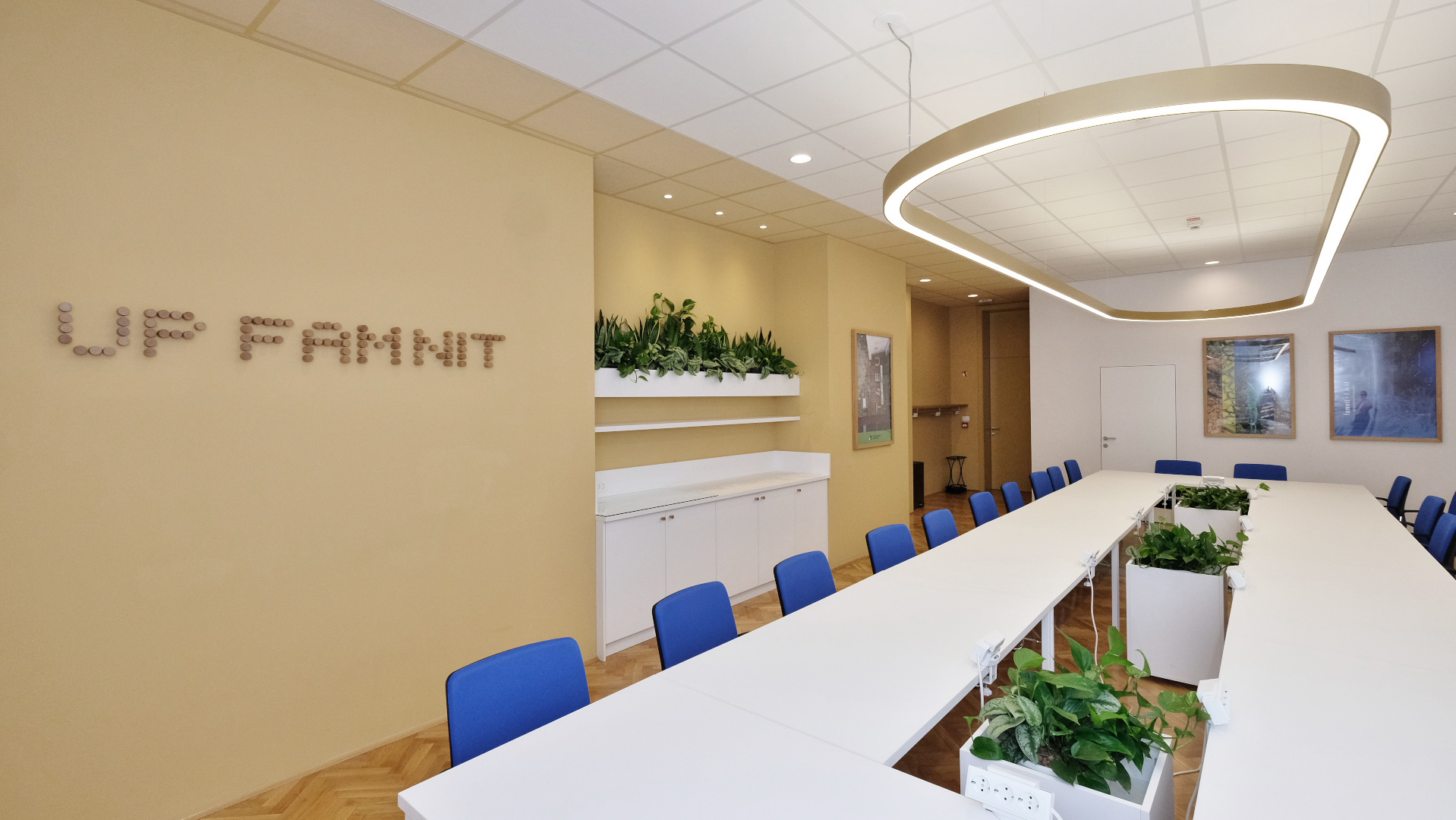
The space is designed to serve simultaneously as a meeting room for 24 people, small lecture room, research space, collaborative area for group work, and a place for online meetings. Additionally, the room is suitable for small receptions, supported by a wall-mounted counter and a storage cabinet. With a different table arrangement and connection to the nearby multipurpose study area, the space can also accommodate larger gatherings. Its flexibility is supported by mobile and adaptable furniture, such as folding tables and stackable conference chairs.
During renovation various challenges arose. One of the main issues was articulating and designing a space with irregular interior dimensions and multiple entrances. It was essential to establish a clear spatial hierarchy and appropriately connect and visually separate the different functional areas (distinguishing between the circulation zone and the central meeting area). This division was emphasized using color on the wall and ceiling. The central area is defined by a large rectangular table that gives the space a sense of stability, and a curtain that softens the irregular rhythm of standout window columns while also allowing for light regulation. Oak color was chosen as the dominant one in the transitional areas, while a neutral white color was used in the central space. For the chairs we chose an accent blue color, which is a recognizable color of UP FAMNIT. The central meeting area is further highlighted by a large oval light fixture that creates a pleasant and calming atmosphere. Natural elements, such as plants and wooden details, complement the interior. The wall sign “UP FAMNIT,” wooden frames on the wall panels, and the beautifully restored oak parquet create a space for communication and inspiration.
However, the project also revealed specific implementation challenges. The original plan to fully preserve the dropped ceiling could not be realized. Additionally, construction errors emerged, leading to additional unplanned work. Honest and well-intentioned communication between designers and contractors is crucial during renovations, as implementation is often unpredictable, costly, and time-consuming. Every piece of building material that is saved and repurposed rather than discarded adds value to the space and reinforces the awareness that we are contributing to the collective fight against climate change.
Authors: Zijada Adembegović Hujdurović and Eva Prelovšek Niemelä, InnoRenew CoE
Photos: Alen Ježovnik