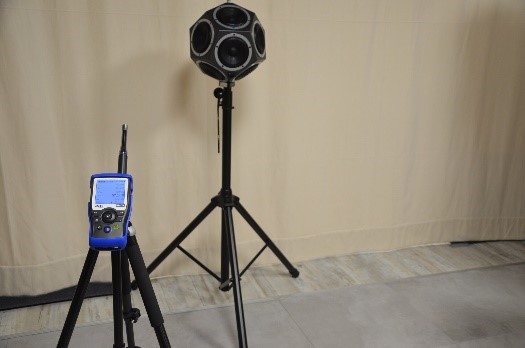

In-situ and laboratory measurements
Material and product testing and services
Thermal Analysis
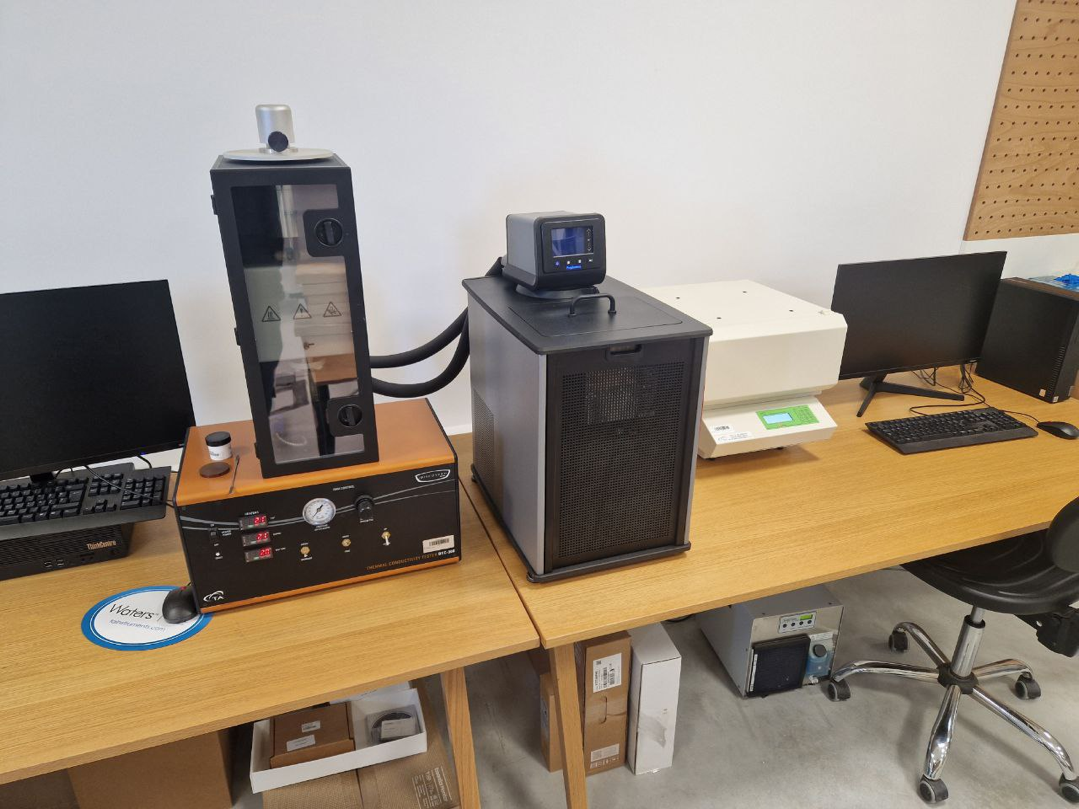
Thermal insulation is a critical material for both new construction of buildings as well as retrofitting existing building stock to improve energy performance. InnoRenew can measure thermal diffusivity/conductivity according to ISO 8301, ASTM E1530, and ASTM C518. Here, we have access to two devices depending upon the need. The FOX 314 is best used for measuring heat flux in panels, while the DTC 300 is well-suited to research work for material & product development of smaller samples.
In-Field Analysis
When products cannot be sampled and brought into the lab, we can go to the product in the field and measure a variety of parameters.
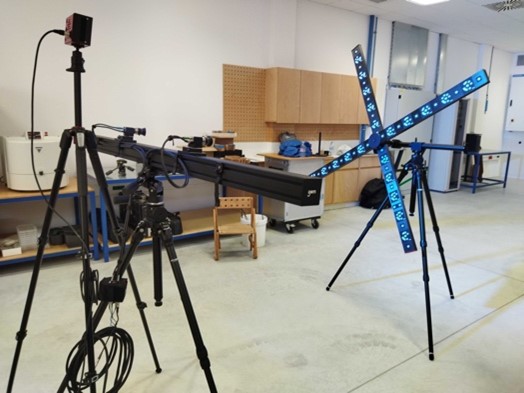
InnoRenew can conduct field measurements utilizing our thermal camera, digital image correlation, resistograph, vibration exciter, and 3D laser scanner. These devices allow us to learn about energy performance in the building envelope, moisture leaks, structural integrity of beams and columns, deflection and load distribution in structures, vibration periods and damping values, as well as measure and recreate 3D pointclouds of environments for further modelling input.
Static Mechanical Property Measurements
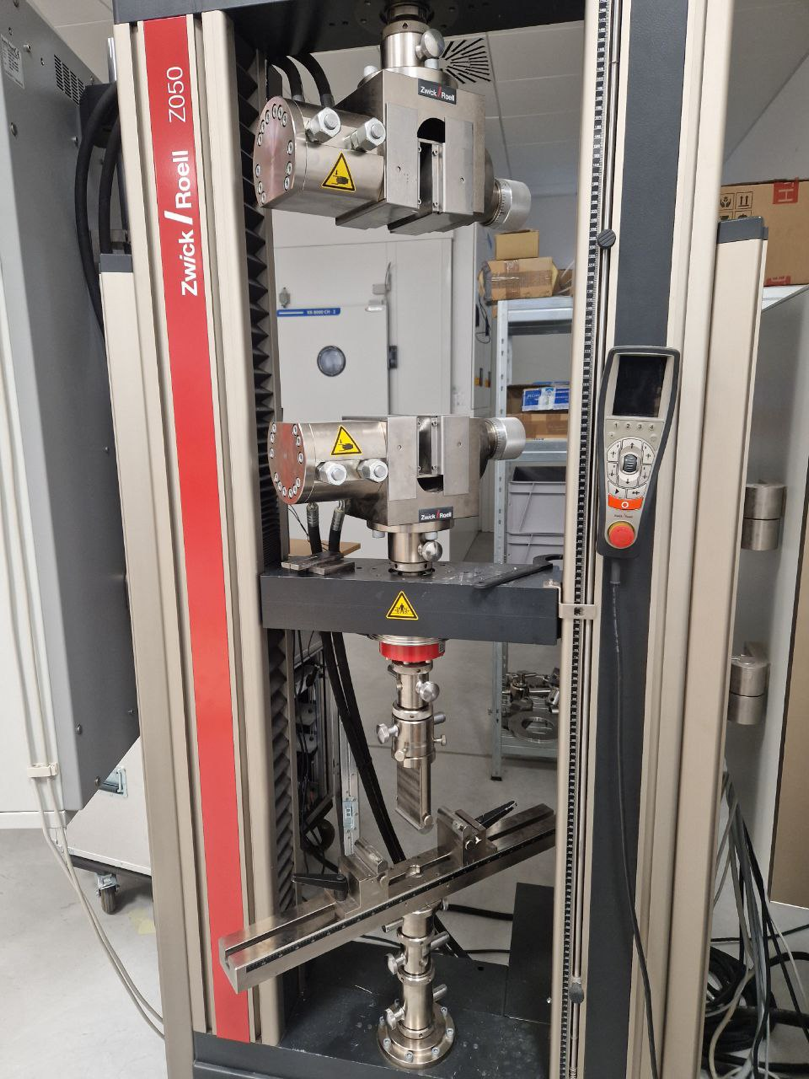
Static, mechanical testing is a staple of product development, modelling, quality control, and certification.
We can conduct static testing of materials in flexure, compression, and shear up to 100 kN. These tests can be conducted in a controlled environment (temperature and humidity) that encompasses the testing fixtures.
Dynamic Mechanical Property Measurements
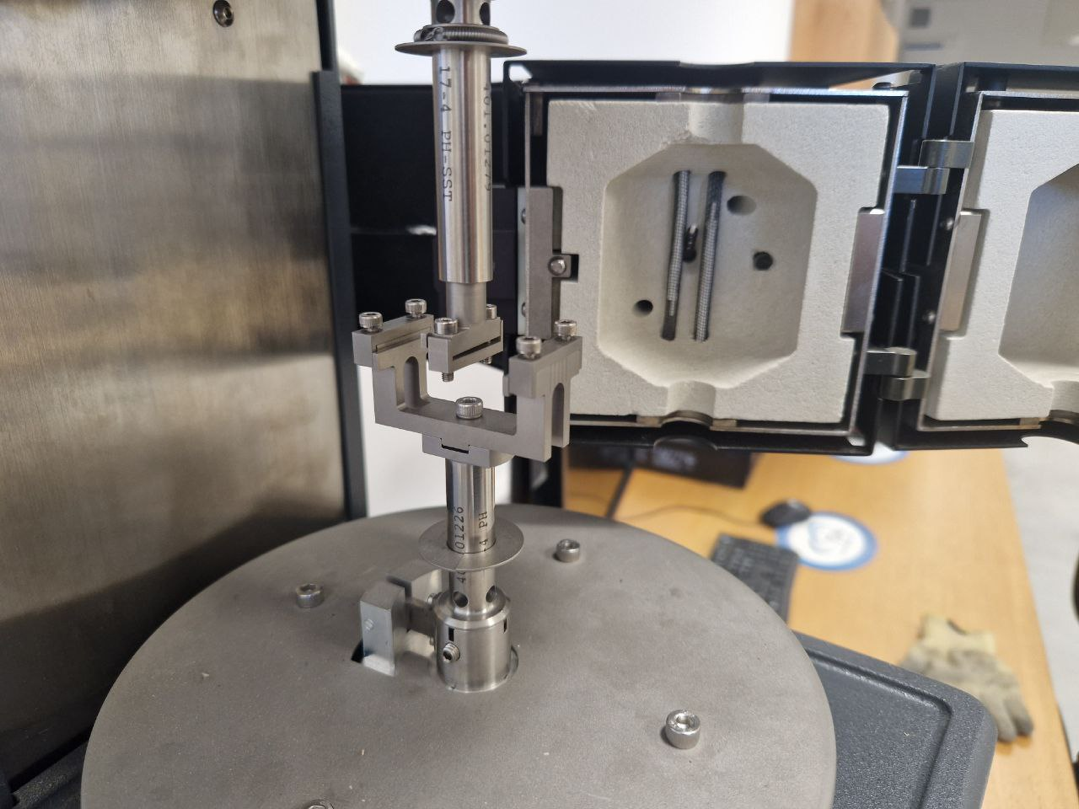
Dynamic mechanical analysis (DMA) is a technique used to study the viscoelastic behavior of materials. Organic materials, like wood, natural polymers & adhesives, coatings, etc. fall into this category.
DMA is performed in either tension, compression, shear, or single/dual cantilever geometries. Specimens are exposed to loading in a cyclic manner and their dynamic response is recorded. In addition to oscillation, heat ramps can be applied to monitor the effect of changing temperature. From these tests we can learn the dynamic/complex modulus which can tell us important information regarding storage and loss moduli and the ratio between them (damping).
Acoustic
Dynamic Stiffness Determination
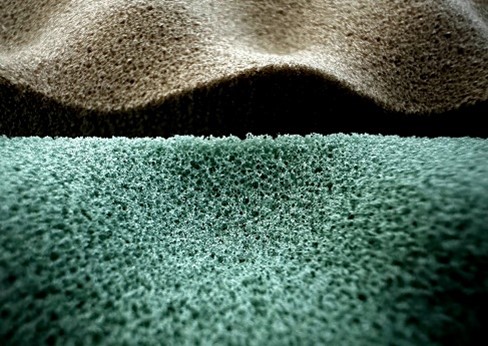
The ability of a material layer to be used as an impact sound insulation layer in floating floors is characterized by its dynamic stiffness. The dynamic stiffness is directly related to the improvement of the impact sound insulation of the floor and is therefore the most important acoustic parameter for impact sound insulation products.
In the Acoustic Properties Laboratory, dynamic stiffness is determined according to EN 29052-1:1992. For the test, square samples of 20 cm are used, which are subjected to a static load of 200 kg/m2.
Airborne Sound Insulation Measurements
The airborne sound insulation of walls and floors is essential to achieve acoustic separation between rooms in a building. With sufficient sound insulation, privacy is maintained and independent activities in a building are made possible. The most important parameters characterizing the sound insulation of partition elements are the sound insulation rating and the sound level difference, both of which are generally specified as requirements for each specific building type.
The InnoRenew CoE acoustics laboratory team carries out field measurements of airborne sound insulation in buildings. The measurements are carried out in accordance with ISO 16283-1:2014 measurement procedure. The measurement results are also given as a single-number rating in accordance with ISO 717-1.